
Uncertainty has a way of creating noise, and 2025 brought plenty of it. For property owners, that noise can be unsettling, and this is especially true for those who are viewing what appears to be a less-than-stellar year on paper. But keep in mind this adage that you were likely told at least once when you first began your investment journey: real estate investment is a long-play.
Our goal with this update is simple: to give you a clear, grounded view of what’s actually happening in the housing and rental markets, why it looks the way it does, and what it means for your investment going forward. No hype or fear – just real data, real context, and real strategy.
Markets move in cycles. We know this, and a softer year does not mean you made a bad decision. In many cases, it means you’re in the middle of a transition phase, and those phases are often where long-term investors quietly win.
First Up: The Grand Rapids Housing Market

The Housing Market: Steady, but Slightly Cooling
The Grand Rapids housing market is continuing to transition out of the overheated post-pandemic phase and into a more balanced growth cycle. That shift is healthy, even if it feels unfamiliar after several years of rapid appreciation.
Key Data at a Glance (City of Grand Rapids – 2025 YTD)
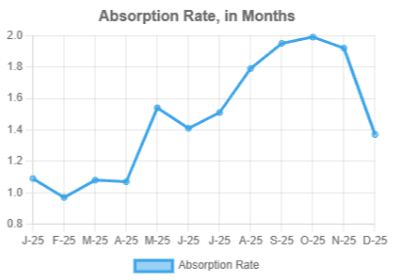
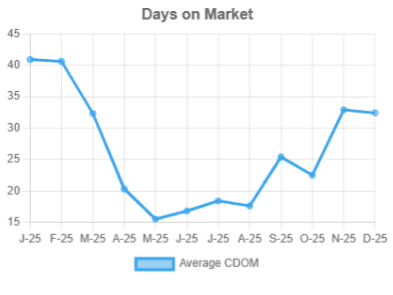
- Average Sale Price: $311,162 (+2.9% YoY)
- Average Days on Market: 25 days
- Average Absorption Rate: 1.47 months
What this tells us:
- Prices are still rising, just at a more predictable pace.
- Homes are still selling quickly when priced correctly.
- Buyers have slightly more breathing room, but sellers still hold leverage.
This is normalization. The environment created when we saw historically low interest rates and extreme buyer competition that drove prices up at unsustainable speeds was never going to last. What we are seeing now is a return to a healthier rhythm, where pricing accuracy matters, overbidding is still present but less common, and decisions are made more thoughtfully.
Where Demand Is Strongest
- $200k–$399k: The core of market activity
- $400k–$500k: One of the fastest-growing segments (+35% YoY sales)
- $600k+ homes: Growing demand, especially among move-up buyers
This data shows us that Grand Rapids remains a low-risk, high-stability market.
Interest Rates: Slowly Easing, But Still Elevated
Interest rates have begun to slowly come down from the highs experienced over the last couple of years. We’re not anywhere close to the 2.5–3.2% range (and we may never be), but we’re seeing an average of the low 6% range, and the gradual easing is already changing buyer and refinancing behavior.
What we’re seeing:
- More buyers cautiously re-entering the market as affordability improves
- Renewed conversations around refinancing for owners who bought or refinanced at higher rates
- Increased confidence in long-term holding strategies
Even small rate drops can have a meaningful impact on monthly payments and purchasing power. Over time, this opens the door for owners to:
- Refinance to lower payments and widen cash flow margins
- Execute cash-out refinances to grow portfolios or complete capital improvements
- Improve overall return on investment
For long-term investors, this trend supports a hold-and-optimize strategy rather than a sell-and-exit approach.
Next: The Grand Rapids Rental Market

The Rental Market: Stabilizing After the Surge
Mirroring the general housing market, the rental side also continues to reflect stabilization after the unprecedented growth in rent pricing. For owners who entered the market during the peak of pandemic-driven rent growth, this can feel like a step backward. In reality, it’s a move toward predictability, which supports strategic mid-term and long-term financial planning and portfolio decision-making.
What’s Actually Happening
- Rent growth has slowed
- Inventory has increased
Our internal data shows that 2025 rents are slightly below 2024 levels but are following the same seasonal trends. This consistency is valuable. It allows us to price more accurately, forecast more reliably, and guide owners with greater confidence.
We are currently in the winter “slow season,” which brings:
- Lower listed rents
- Fewer applicants
- Longer decision timelines
This happens every year. Activity traditionally begins picking up in April and May, and we expect the same pattern moving forward.
Why Accurate Pricing Matters More Than Ever
National data from RentEngine confirms what we see locally: the first week of a listing is critical.
When a property is priced too high out of the gate:
- It misses the initial wave of qualified interest
- Days on market increase
- The listing becomes “stale”
- Price reductions become reactive instead of strategic
The common strategy of “list high and drop the price” almost always results in longer vacancy and higher total cost for owners.
Every extra day vacant is lost income, and in many cases, that loss outweighs any marginal rent increase you might have hoped to achieve.
Our approach is data-driven and market-responsive. The goal is not to chase the highest possible rent. The goal is to quickly secure the best-qualified tenant at the best market-supported price.
Tenant Retention: The Quiet Profit Driver
This is one of the most important points in this entire update. In a stabilizing or softening rent environment, retention becomes more valuable than rent increases.
Turnovers are expensive. Here’s what a typical turnover can include:
- Maintenance and repairs
- Cleaning
- Paint and flooring
- Leasing and marketing costs
- Staff time
- And most significantly… vacancy loss
Even a conservative turnover can easily cost $2,000–$4,000 when all factors above are considered.
Now compare that to a scenario where:
- A good tenant wants to stay
- The market supports a flat renewal or even a slight decrease
- You avoid vacancy, make-ready costs, and leasing expenses
In many cases, retaining a solid tenant (even at a temporary rent adjustment) is financially smarter than pushing for a higher rate and risking vacancy.
Remember: rent adjustments are not permanent. Future renewal cycles always allow for increased rent.
“My 2025 Numbers Don’t Look Great.” Let’s Talk About That
We know owners have or will be reviewing their 1099s soon and are feeling disappointed. That matters, and we don’t want to minimize it. However, it’s critical to separate short-term performance from long-term value.
Real estate is not a quarterly investment. It is a long-term wealth strategy.
Markets move in cycles:
- Growth
- Plateau
- Correction
- Recovery
A softer year does not erase years of appreciation, equity growth, tax advantages, or future upside. In many cases, it simply reflects:
- A seasonal shift
- A rate environment transition
- A normalization phase after an unsustainable peak
The investors who build lasting portfolios are rarely the ones who time the top perfectly. They are the ones who stay positioned when conditions improve.
Why Holding Still Makes Sense
Despite headlines and online speculation, the fundamentals in Grand Rapids remain strong.
We continue to see:
- Population stability and growth
- Major development projects
- Economic investment
- Infrastructure expansion
Projects like the amphitheater, soccer stadium, and John Ball Zoo aquarium are not just exciting; they’re economic drivers. They support tourism, job creation, and long-term housing demand.
At the same time, many would-be homebuyers are waiting for rates to fall further. That keeps pressure on the rental market and supports ongoing demand.
This creates opportunity for owners to:
- Hold and allow appreciation to continue
- Refinance as rates decline
- Widen cash flow margins
- Leverage equity to grow portfolios
In other words: this is not a dead period. It’s a positioning period.
What This Means for You as an Owner
Here’s the practical takeaway:
- The housing market is cooling into stability, not collapsing
- Interest rates are easing gradually, improving long-term leverage
- Rents are stabilizing, creating predictability
- Turnovers are a major cost risk
- Long-term fundamentals in Grand Rapids remain very strong
And most importantly: retention is more valuable than ever
If you’re not thrilled with your 2025 performance, that does not mean your investment was a mistake. It often means you’re in the middle of a market transition, and those transitions are where strategy matters most.
Our role is to help you:
- Price accurately
- Retain quality tenants
- Reduce unnecessary costs
- Protect your asset
- And position your investment for long-term success
We’re not in the business of reacting to headlines. We’re in the business of navigating cycles.
And right now, the data tells us that patience, discipline, and smart management are the winning moves.
If you have questions about your specific property, performance, or strategy, we encourage you to reach out! Every situation is different, and real strategy is never one-size-fits-all.
We’re here to help you make informed decisions, not emotional ones.

 Sergio joined United Properties in 2020. He is a graduate from Pickens Technical College as a Nurse Assistant and as a Small Animal Care Provider in 2010. In the past nine years, Sergio has had various jobs, all focused around customer service.
 Eden joined United Properties in 2016. Eden graduated from Davenport University in 2015 with an Associate’s in Business Administration. She’s the Executive Assistant to the Owner of United Properties, with a focus on procedural documentation. She enjoys playing guitar, reading, and doing outdoor activities. Eden is trilingual and able to communicate in English, Spanish, and American Sign Language.
  David joined the United Properties team in 2019 as the Director of Client Relations and Business Development. In this capacity, he is responsible for leading all leasing, application underwriting, tenant relations, accounts receivable, process improvement, remote workers, and general office functionality (essentially anything outside of maintenance and service). David comes from a longstanding career at a Fortune 15 company primarily in a sales and customer service leadership role.

 Matthew joined the United Properties in early 2020. He is a graduate of Lee University with a bachelor’s in Intercultural Studies and also a master’s in Discipleship and Christian Formation. Matthew serves as a project manager over the Rent Ready process. He has 20 years of construction experience and over 10 years of experience in leadership positions. He oversees a team of technicians and schedules outside vendors getting properties back to the United rent-ready standard so that they can be leased again.

 Cristina joined United Properties as the Accounting and Billing Team Lead in October of 2020. She has experience as a technology professional, an English-Spanish translator, and has worked the past several years as the treasurer of her condominium.
 Rick joined United Properties in 2020 as a Service Coordinator and then later transitioned to the Collections team, where his customer service shines. Rick has an extensive background in customer service and enjoys being able to resolve issues. He and his wife are raising their two kids and in his free time, Rick enjoys making his own homemade jerky.
 Harriet joined United Properties as a Accounting & Billing Specialist in February of 2021. She has experience as a bookkeeper and a Property Manager for a Real Estate account. She was a working student during her college days. Harriet loves cleaning because she thinks it is therapeutic. She also loves watching series during her free time, and she’s a fur mom of one dog. Her inspiration to work every day is her family.
 Diego has an extensive background in customer service and, most recently in Maintenance and
 Paulina joined United in early 2021 as a Leasing Assistant. She has a background studying social work, with several years of experience in customer service. She speaks English and Spanish fluently and loves to learn. Paulina enjoys small road trips and cold, rainy weather. Her dog is her favorite thing in the world.
 Jessica has a Bachelor’s Degree in Financial strategies and public accounting and is studying a masters in Blockchain and Fintech regulation. She has previous experience as a customer service representative. She speaks English and Spanish. She loves taking long walks with her three dogs, hiking and road tripping during the weekends.
 Chris Good is new to the United Properties Team since June 2022 as a Business Development Manager. With years of experience in both the construction industry (Master Electrician) and the Real Estate industry (Broker), he will closely work with new and experienced investors to facilitate their real estate goals.


 Melba Alvarez
 Enrique Vergara (Henry)
 Alyssa Conklin


 Leo Lacson
 Dhyana Aragon
 Joksan Gomez
 Soroya has been with United Properties since March 2025. Her problem-solving, time management, and communication skills help her shine when working collaboratively with tenants and prospects. She is currently pursuing a degree in Cyber Security at Davenport University. Thanks to her tech-savviness, she excels at navigating and troubleshooting common technology and software issues.
 Marlon Joined United Properties in 2025 as a service coordinator. He arrived with solid experience in customer service, property management, and marketing. If you need assistance with either a new or a previous situation, he will be more than glad to help you. Depending on the season, he likes spending time outdoors, going hiking, or simply taking a stroll around town to see what’s new in the city.
 Hector began his career in customer service in 2017, gaining valuable experience in client support and communication. In 2021, he transitioned into sales roles, where he developed a strong ability to drive results and build relationships. Since 2023, he has worked in maintenance, IT, and tech support, expanding his skills in troubleshooting, systems support, and hands-on problem-solving. His background combines over eight years of customer-facing roles with a growing expertise in technical support and operations.
 Gar Allison joined United Properties as Director of Operations in August 2025. He brings a decade of experience, covering construction project management, supply chain, sales, marketing, and regulatory compliance. Before that, he spent five years as an Engines Sales Representative in Kansas City, MO, shortly after graduating from Davenport University in 2011 with a bachelor’s degree in business management.

 Junior joined United Properties as a Leasing Assistant in February 2026 with a background in customer service and insurance claims. Junior is a lifelong learning with a genuine passion for helping people, especially when it comes to finding a place they can truly call home, and Property Management is where he feels most connected to this purpose. Outside of work, Junior is a proud father of two children that he raises with his wife, who constantly inspires him to grow beyond his limits while nourishing his hobbies through creative outlets like music, including guitar and singing.